
Discover Easter in Andalucía with Marbella Estates. Experience Semana Santa in Marbella, Málaga & Sevilla and read on to learn interesting facts and traditions about this extraordinary holiday.
Each year, travellers are coming to Southern Spain during Semana Santa, one of the most prestigious and culturally rich periods of the year. At Marbella Estates, having spent decades on the Costa del Sol, we consider this moment not only the most meaningful, but also one of the most captivating times to discover the region.
Throughout Holy Week, the streets transform into open-air theatres of tradition. Impressive processions, accompanied by candlelight, music, and moments of profound silence, create an atmosphere of understated luxury and authenticity that cannot be replicated elsewhere in Europe.
Semana Santa, or Holy Week, is far more than a series of processions—it is a profound expression of faith, history, and Andalusian identity. Dating back centuries, these traditions bring entire cities together in a unique blend of devotion, artistry, and heritage.
Meaning of Semana Santa
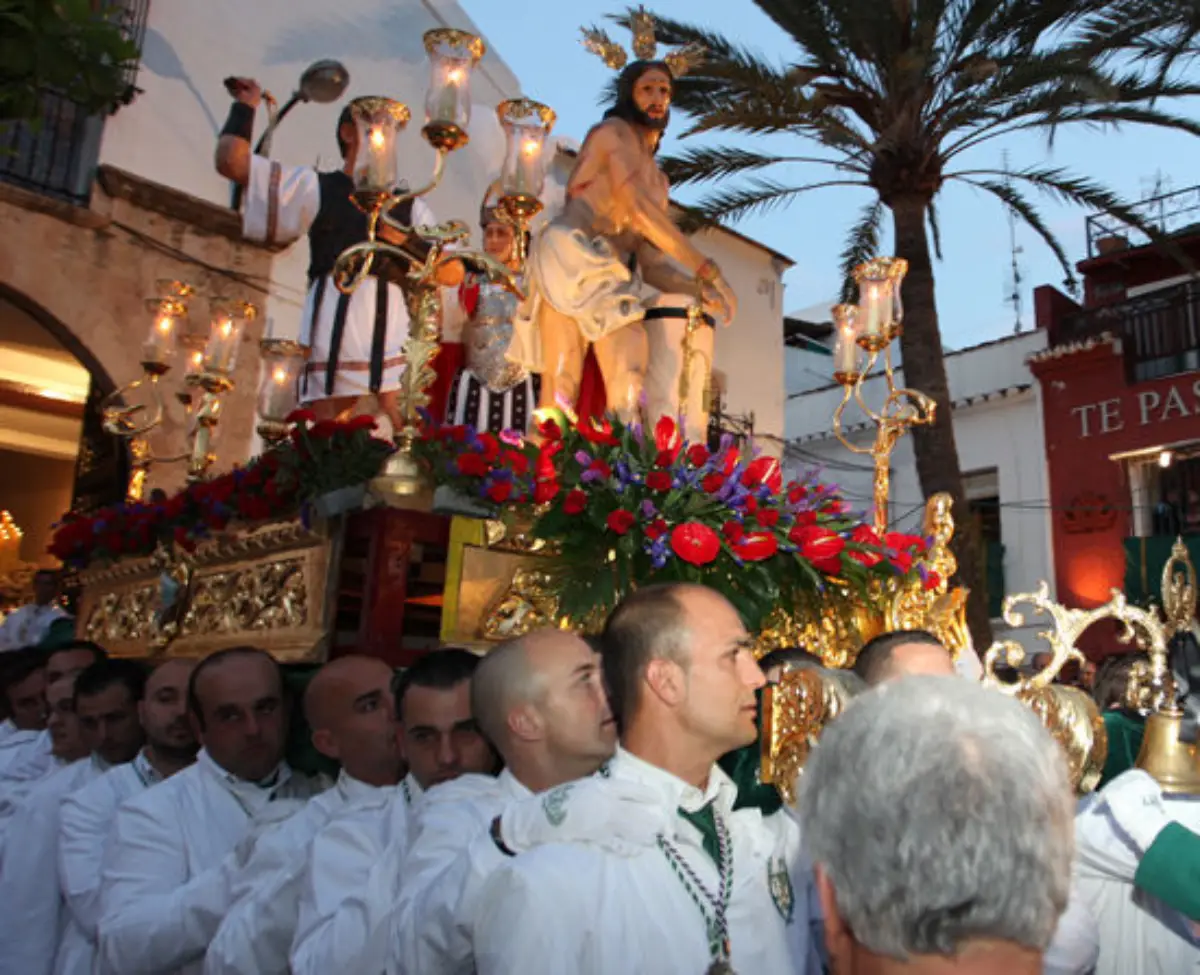
Each procession represents scenes from the Passion of Christ, carried on magnificent “tronos” or floats, often adorned with flowers, silver, and gold. These are accompanied by penitents, musicians, and devoted participants who walk for hours through the streets.
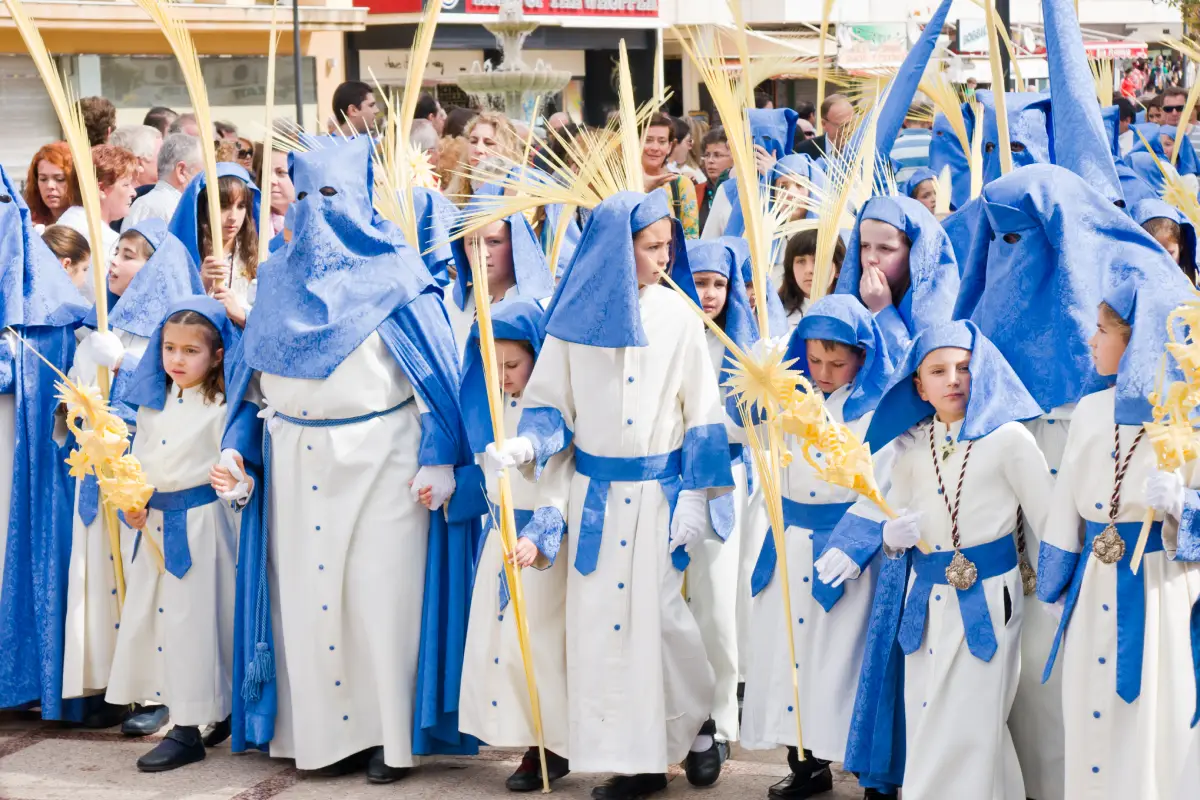
The Symbolism of the “Capirote”
One of the most striking and often misunderstood elements of Semana Santa is the traditional pointed hood, known as the capirote.
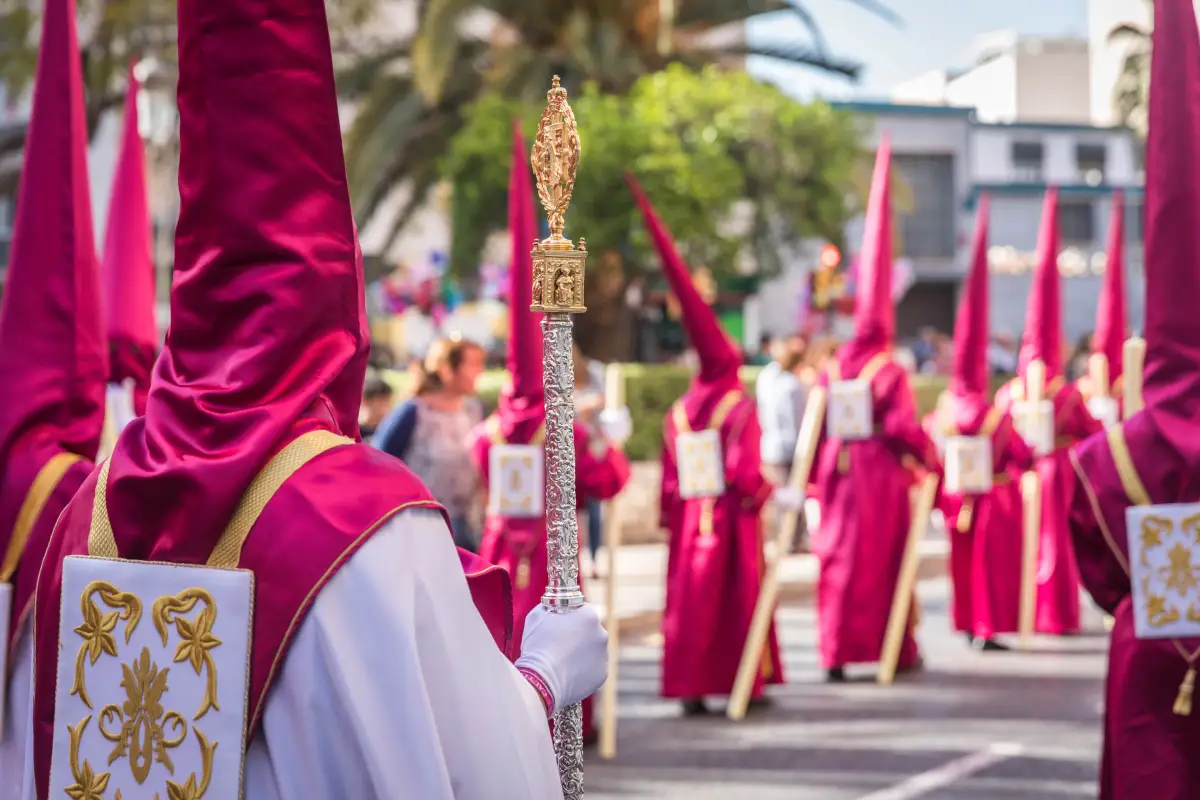
These tall, conical hats—sometimes unfamiliar to international visitors—have deep religious significance. Historically, they were worn as a symbol of penance and humility, allowing the wearer to remain anonymous while expressing repentance.
Barefoot Devotion: A Powerful Act of Faith
During Semana Santa, you may notice that some participants walk barefoot as part of the processions.
This is a deeply symbolic act known as a “promesa” (promise or vow). Individuals choose to walk without shoes as a form of:
- Penance
- Gratitude
- Personal sacrifice
Many do this in fulfilment of a promise made during a difficult moment in their lives—often in thanks for recovery, protection, or blessings received.
Walking barefoot through the streets, sometimes for several hours, reflects a profound level of devotion and spiritual commitment. It is not performed for attention, but as a personal and intimate expression of faith.
For visitors, it is one of the most moving and authentic aspects of Semana Santa—revealing the deep emotional connection that Andalusians have with this tradition.
The Narrow Streets: A Unique Andalusian Spectacle
One of the most captivating moments of Semana Santa unfolds in the narrow streets of Andalucía’s historic centres, where the processions become even more intense and emotional.
As the majestic tronos—often monumental in size and weight—move slowly through these tight spaces, they face an unexpected challenge: low-hanging cables and street fixtures. At this precise moment, a dedicated individual steps forward with a long wooden pole, carefully lifting the cables to allow the float to pass seamlessly.
This delicate coordination requires absolute precision, concentration, and teamwork. The atmosphere becomes almost electric—a mix of tension, silence, and anticipation.
Then, as the trono clears the obstacle, the silence is suddenly broken by the powerful sound of Semana Santa orchestral music, echoing through the streets. The contrast between stillness and sound, effort and elegance, creates a truly unforgettable moment.
It is this combination of tradition, unpredictability, and raw emotion that defines the magic of Semana Santa—an experience that cannot be replicated anywhere else in the world.
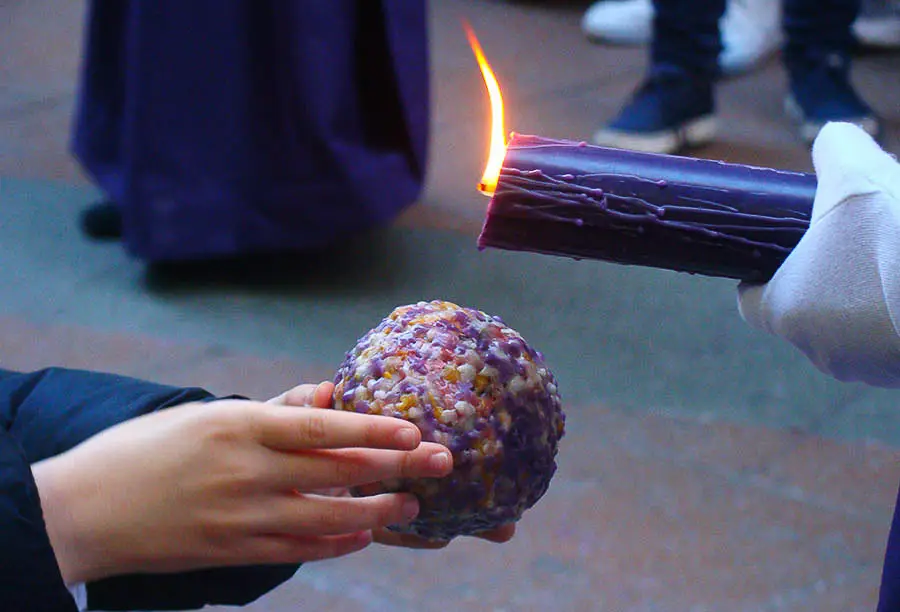
Candles, Wax, and Childhood Traditions
Another beautiful detail of Semana Santa is the presence of candles carried by participants. As the processions move slowly through the streets, melted wax—known as “cera”—falls to the ground.
Children eagerly collect this wax, often shaping it into small balls as a playful tradition passed down through generations. It’s a charming and authentic glimpse into how deeply rooted these celebrations are in family life and local culture.
Malaga – The Legendary Legion
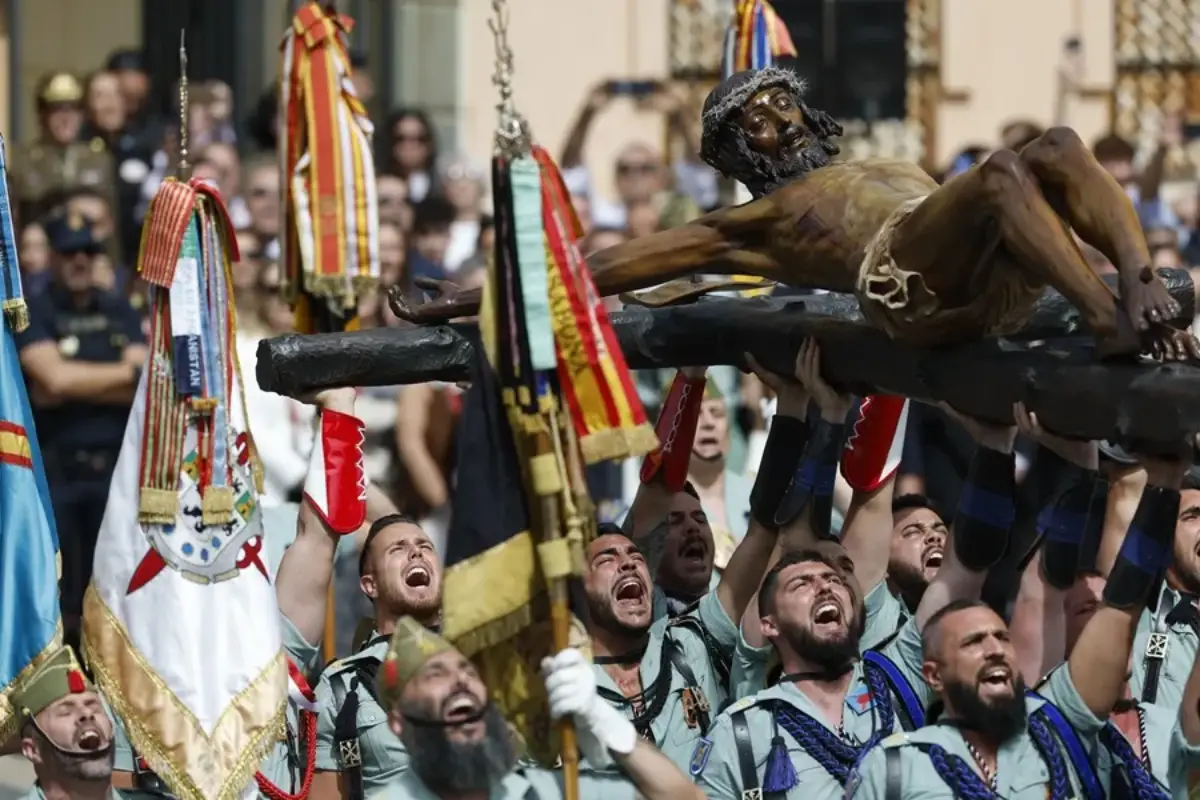
One of the most iconic and emotionally powerful moments of Semana Santa takes place in Málaga, with the arrival of the Spanish Legion (La Legión).
Each year, legionnaires parade through the city to accompany the Christ of Mena. They usually arrive at 10am in Malaga Port on Holy Thursday. Their boat docks in the Palmeral de las Sorpresas, where the authorities greet the troops before they begin their parade.
Their precise movements, distinctive uniforms, and the famous hymn “El Novio de la Muerte” create an unforgettable spectacle.
This tradition attracts thousands of spectators and is considered one of the highlights of Holy Week in Andalucía—blending military pride, history, and deep religious devotion. If you want a front-line view, grab your spot early in the morning – thousands of locals attend, so it’ll be busy.
Sevilla: The Most Iconic Celebration in Spain
If there is one place where Semana Santa reaches its highest expression, it is undoubtedly Sevilla.
Here, Holy Week is not simply celebrated—it is lived with extraordinary intensity, devotion, and pride. The entire city transforms into a stage of emotion, where centuries-old traditions unfold with breathtaking beauty.
Sevilla is home to some of the most prestigious and awaited processions in Spain, each belonging to historic brotherhoods (hermandades) that prepare all year for this singular moment.
Among the most iconic:
- La Macarena (Esperanza Macarena)
One of the most beloved Virgins in Spain, attracting immense crowds and devotion - Esperanza de Triana
A symbol of elegance and deep emotional connection for Sevillanos - El Gran Poder
Known as “The Lord of Sevilla,” one of the most respected and powerful images - Los Gitanos
A vibrant and passionate procession, rich in cultural identity - La Madrugá (Holy Thursday night to Good Friday)
The most anticipated night of the entire week, when several major brotherhoods process through the city until dawn
Each procession is a masterpiece—combining art, history, and spirituality—carried on magnificent floats through the narrow, historic streets of Sevilla.
Emotion, Devotion… and Uncertainty
If rain is forecast, processions may be cancelled at the very last moment to protect the sacred statues and artworks, some of which are centuries old.
This decision is deeply emotional.
Participants—who have spent the entire year preparing—often wait inside the church, hoping for the moment when the doors will open and the Virgen or Cristo can finally emerge into the streets.
When the decision is made not to proceed, it is not uncommon to see tears, silence, and profound disappointment.
Because for many, this is not just an event—it is a once-a-year moment of devotion, identity, and pride.
When the Doors Open… Magic Happens
And when the doors do open, the atmosphere is indescribable.
The crowd falls silent. The church doors slowly part. And as the first notes of music rise, the Virgen appears, carried gently into the night.
It is a moment of pure emotion—shared by thousands, yet deeply personal.
When and Where to Experience the Most Iconic Processions
Throughout Holy Week, processions take place daily, from Palm Sunday (Domingo de Ramos) to Easter Sunday (Domingo de Resurrección).
Some of the most prestigious and must-see processions include:
- Sevilla – Known for its grandeur and elegance, with processions starting at 18.00pm until late into the night and early morning, mostly in the historic centre and around the Cathedral. “La Macarena” starts from the Basilica de la Macarena, “Esperanza de Triana” cross the Triana Bridge.
We recommend consulting the official programme https://www.semana-santa.org/itinerario-oficial-semana-santa-de-sevilla/ - Málaga – Famous for its large-scale “tronos” and the participation of La Legión. The best place to see the processions are Calle Larios ( Main Street), Plaza de la constitución, Alameda principal, Cathedral Area and Narrows street.
You can download a calender of Easter week processions in Malaga here. Click on “horarios y itinerarios”, https://agrupaciondecofradias.com/horarios-e-itinerarios/
Don’t miss the arrival of the Legionarios in Málaga at 10.00am on Holy Thursday – one of the most iconic moments of Semana Santa. Please note that large crowds are expected due to its popularity. - Marbella & Estepona – More intimate yet equally authentic, offering a closer connection to the tradition. The old town or “Casco Antiguo” is the most important area to experience processions in Marbella. Plaza de la Iglesia (Iglesia de la Encarnación) is the main starting point, Plaza de los Naranjos, Calle Ancha / Calle Viento / Calle Salinas, Calle Aduar & surrounding streets.
We recommend consulting the official programme published by the Ayuntamiento de Marbella: https://semanasanta.marbella.es/inicio/marbella.html
Processions typically begin in the late afternoon and continue into the early hours of the night, creating a magical atmosphere under the glow of candlelight.
For the most exclusive experience, many visitors choose to enjoy processions from private balconies or terraces, offering both comfort and a privileged view.
Wishing you all a very Happy Easter Week!
FREQUENTLY ASKED QUESTIONS
What makes Semana Santa in Andalucía unique compared to other countries?
Unlike other Easter celebrations, Semana Santa in Andalucía takes place in the streets, with entire cities transformed into open-air stages. The combination of historic architecture, candlelight, music, and silence creates an atmosphere that is both powerful and unforgettable.
Is Semana Santa only for religious people?
No. While deeply religious, Semana Santa is also a cultural and social event. Visitors from around the world attend to experience its unique atmosphere, history, and beauty.
Why are Málaga’s tronos different from Sevilla’s?
In Málaga, tronos are typically larger and heavier, carried externally by many participants. In Sevilla, they are usually carried from underneath, creating a more silent and controlled movement. Each style reflects the character of the city.
Is Semana Santa suitable for families?
Yes. Semana Santa is deeply rooted in family traditions. Children often attend processions and take part in small customs like collecting candle wax (cera), making it a memorable cultural experience.
What are the bank holidays during Semana Santa in Spain?
In Spain, Holy Thursday (Jueves Santo) and Good Friday (Viernes Santo) are public holidays.
Why is Semana Santa also a great time to visit Marbella?
Semana Santa marks the beginning of spring on the Costa del Sol with pleasant weather, reopening of beach clubs and restaurants, vibrant yet refined atmosphere. It is the perfect time to combine culture, lifestyle, and relaxation.
Is it a good time to buy property in Marbella?
Absolutely. Many international buyers visit during this period, making it an ideal time to explore properties for sale in Marbella while experiencing the lifestyle firsthand.
Marbella is no longer just a destination, it is a lifestyle choice – Book a private consultation with one of our agents now!
Contact us today to view our exclusive properties for sale in Marbella area.
Latest properties for sale
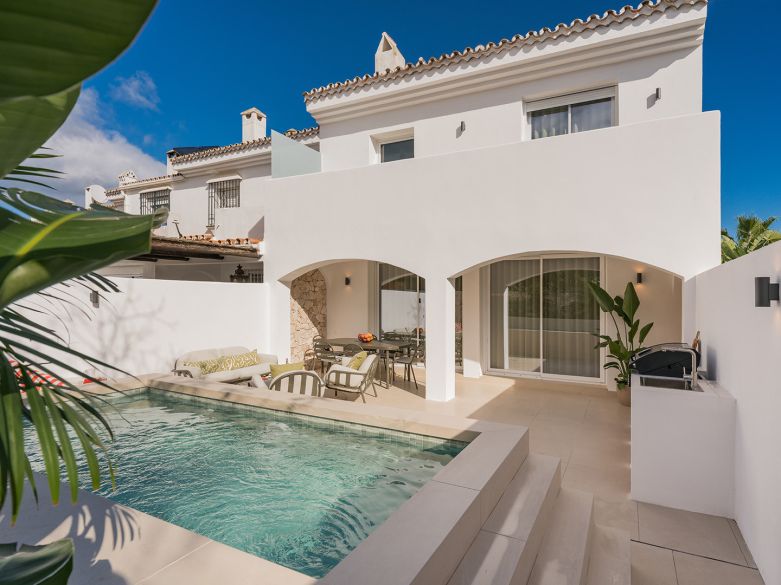


San Pedro Playa – San Pedro de Alcantara
This elegant semi-detached villa is ideally located within a gated community in the highly sought-after area of San Pedro Beach, Marbella — just a short walk from the promenade, sandy beaches, restaurants, cafés, supermarkets, and international schools. The well-established boutique development offers beautifully landscaped gardens, a large communal swimming pool, a padel court, and private…
- 4 Beds
- 3 Baths
- 170 m² Plot
- 211 m² Built
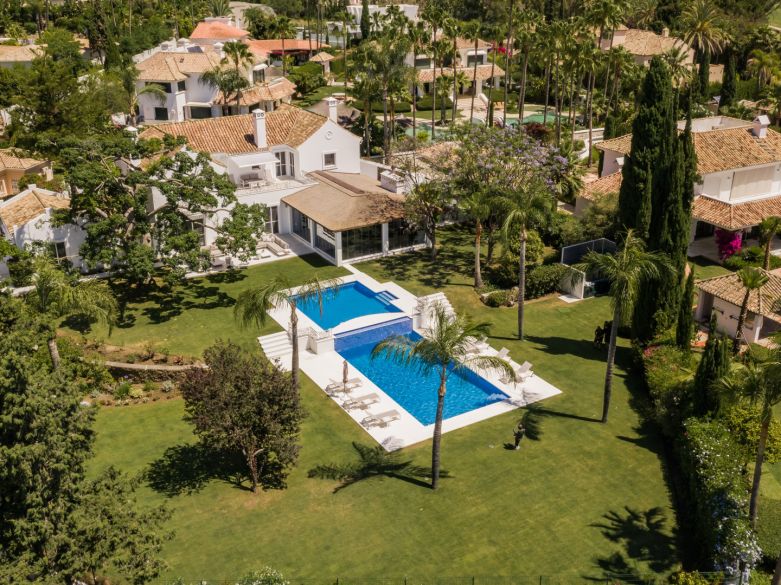


La Cerquilla – Nueva Andalucia
Villa Hermosa in La Cerquilla sits on a generous 2,671 m² plot and offers six spacious bedrooms, blending elegant interiors with inviting outdoor spaces. Across from the bedroom wing is a lush vertical wall garden, ensuring every room enjoys a refreshing green view. For added convenience, a private stairway leads from the carport directly to…
- 6 Beds
- 6 Baths
- 2.671 m² Plot
- 948 m² Built
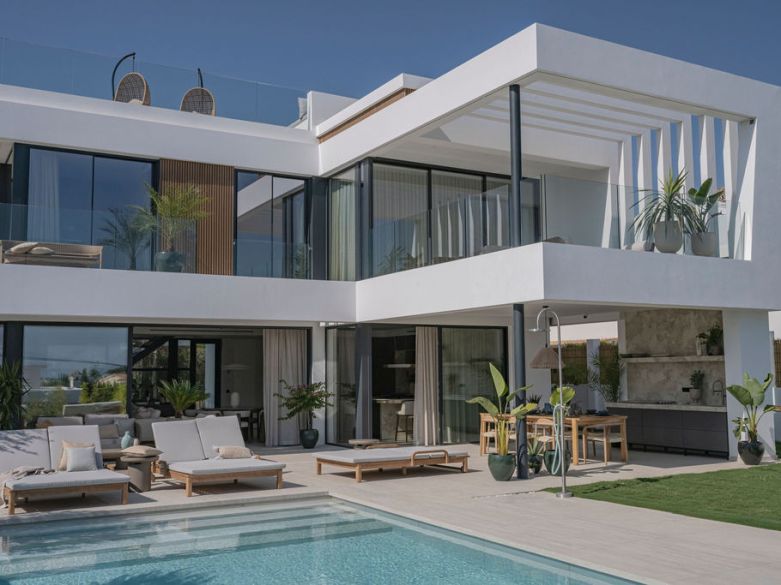


Marbesa – Marbella East
This exceptional contemporary villa in Marbesa offers a perfect blend of modern architecture, comfort, and Mediterranean lifestyle, just a short stroll from some of Marbella East’s finest sandy beaches. Designed by the renowned team at Modern Concept, the property is distributed across multiple levels and showcases a seamless integration of elegant design, high-quality materials, and…
- 4 Beds
- 4 Baths
- 640 m² Plot
- 417 m² Built


Valle Romano – Estepona West
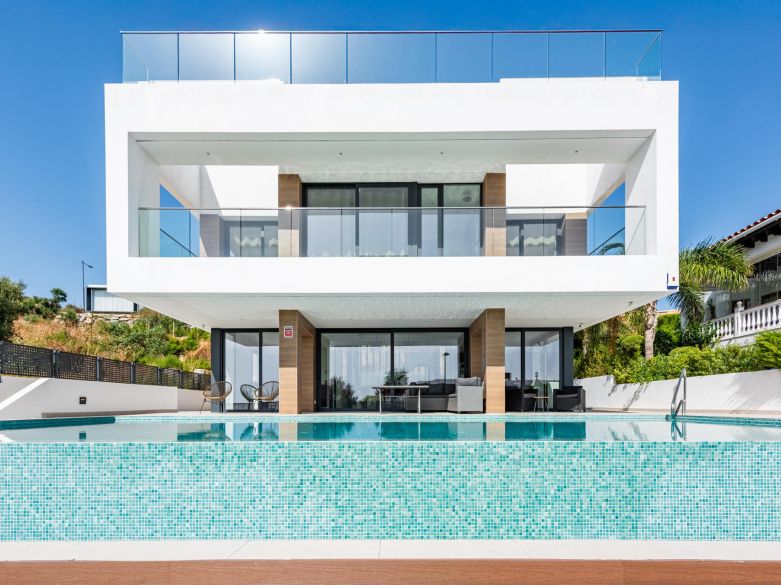
Newly built contemporary villa located in Valle Romano Golf, just west of Estepona. South facing, offering beautiful sea, mountain, and golf views, and only a 5–10 minute drive to Estepona town and all amenities. The main floor features a bright living and dining area with an open-plan INKO kitchen equipped with Gaggenau appliances, with direct…
- 3 Beds
- 4 Baths
- 500 m² Plot
- 296 m² Built